
Hyperinsulinemia And Excess Liver Glucose Output
The Diabetes Series — Part 3
Liver Keeps Releasing Glucose Even When There is Enough
After understanding that the liver carefully balances blood sugar between meals, the next question naturally arises: if this system is so precise, what actually begins to fail?
In diabetes, the issue is not that glucose suddenly appears in the blood. It is that the liver continues to release glucose even when it should have stopped.
The First Change: The Liver Stops Responding Fully
Under normal conditions, insulin suppresses liver glucose output after a meal. Over time, this response begins to weaken.
This is the beginning of insulin resistance at the level of the liver.
The liver continues to release glucose even in the fed state, when it should have reduced its output. What was once a tightly regulated adjustment now becomes a partial response, where the signal is heard but not properly acted upon.
Insulin Resistance Is Not Uniform — It Is Selective
At this stage, insulin resistance does not affect all liver functions equally.
The signal to suppress glucose production becomes weak, but other insulin-driven processes continue. The liver may still take up glucose and convert it into fat, even while it keeps releasing glucose into the bloodstream.
This creates a situation where:
glucose output remains high
fat production in the liver increases
The system is no longer coordinated. It is responding in fragments rather than as a whole.
How This Begins To Affect The Rest Of The Body
This change is not confined to the liver. As insulin levels rise to maintain control, other tissues begin to respond differently.
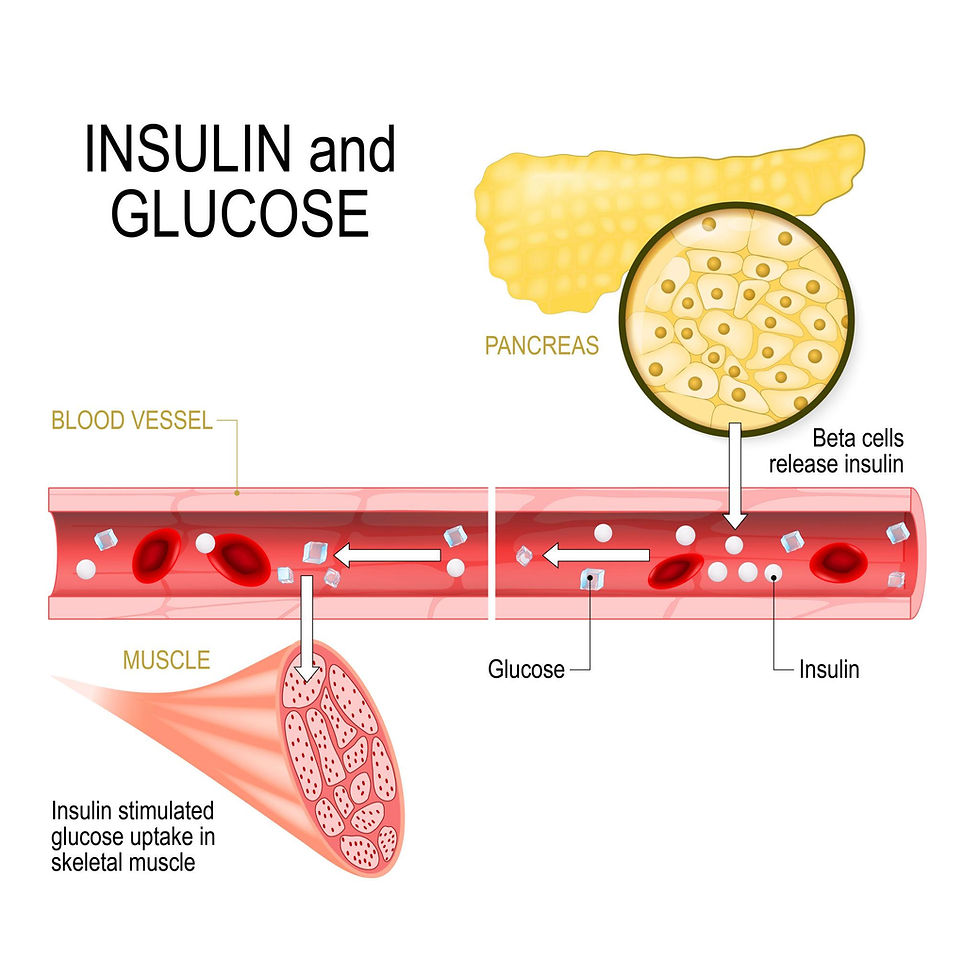
Muscle tissue becomes less efficient at taking up glucose, so energy is not utilised as effectively. Fat tissue, instead of remaining a stable storage site, releases more fatty acids into the bloodstream, which further interferes with insulin signalling.
At the same time, persistently elevated insulin begins to show up in more recognisable ways. Weight gain becomes easier, especially around the abdomen. In some individuals, it is associated with conditions such as PCOS, where metabolic and hormonal signals overlap. In others, it contributes to rising blood pressure and early features of hypertension.
What begins as a local disturbance in the liver is now beginning to involve the whole body, even though blood sugar levels may still appear only mildly elevated.
A Pattern Begins To Form
As this state persists, blood sugar no longer follows its earlier rhythm. It rises higher after meals, remains elevated for longer, and does not return cleanly to baseline. Even during fasting periods, especially overnight, glucose release remains higher than necessary.
This is no longer a temporary imbalance. It is the early pattern of a system that is losing precision.
When Insulin Stops Following Its Normal Pattern
As this pattern develops, insulin also begins to change its behavior. In earlier stages, insulin rises briefly after meals and then falls as balance is restored. That pattern has already been part of the normal system.
What changes now is not the presence of insulin, but its persistence.
As the liver and other tissues respond less effectively, the pancreas begins to release more insulin to maintain control. Instead of short, meal-related increases, insulin remains elevated for longer periods and may stay high even between meals.
For a time, this compensation is effective. Blood sugar levels may still appear only mildly elevated, or even near normal. However, this apparent stability is being maintained by continuously higher levels of insulin.
This sustained elevation is known as hyperinsulinemia.
What Changes — From Normal To Early Dysregulation
This emerging pattern can also be seen in measurable terms. In a healthy state, blood sugar and insulin follow a predictable rhythm. Fasting blood glucose is typically around 70–99 mg/dL, and rises after meals before returning to baseline. Fasting insulin levels are usually low, often in the range of 2–10 µIU/mL, rising briefly after meals and then falling again.
As regulation begins to weaken, this pattern changes in a subtle but consistent way. Fasting blood glucose may still remain within or just above the normal range (often 90–110 mg/dL), but post-meal levels rise higher and take longer to settle. At the same time, fasting insulin levels begin to rise (above ~10–15 µIU/mL), and insulin remains elevated for longer, sometimes even between meals.
Why This Marks A Turning Point
At this stage, control is being maintained by persistently elevated insulin rather than normal regulation. Blood sugar may still appear only mildly elevated, but the system is no longer operating efficiently.
By the time glucose rises clearly, this phase has often been present for years.

Comments