
Is Diabetes Really About Sugar?
Updated: Mar 21
The Diabetes Series — Part 1
Diabetes Does Not Begin With High Blood Sugar
Diabetes is commonly understood as “high blood sugar.”But that is the end result.
Blood sugar rises only when the body can no longer control it.
Glucose is the body’s primary source of energy. It comes from the food we eat, especially carbohydrates.
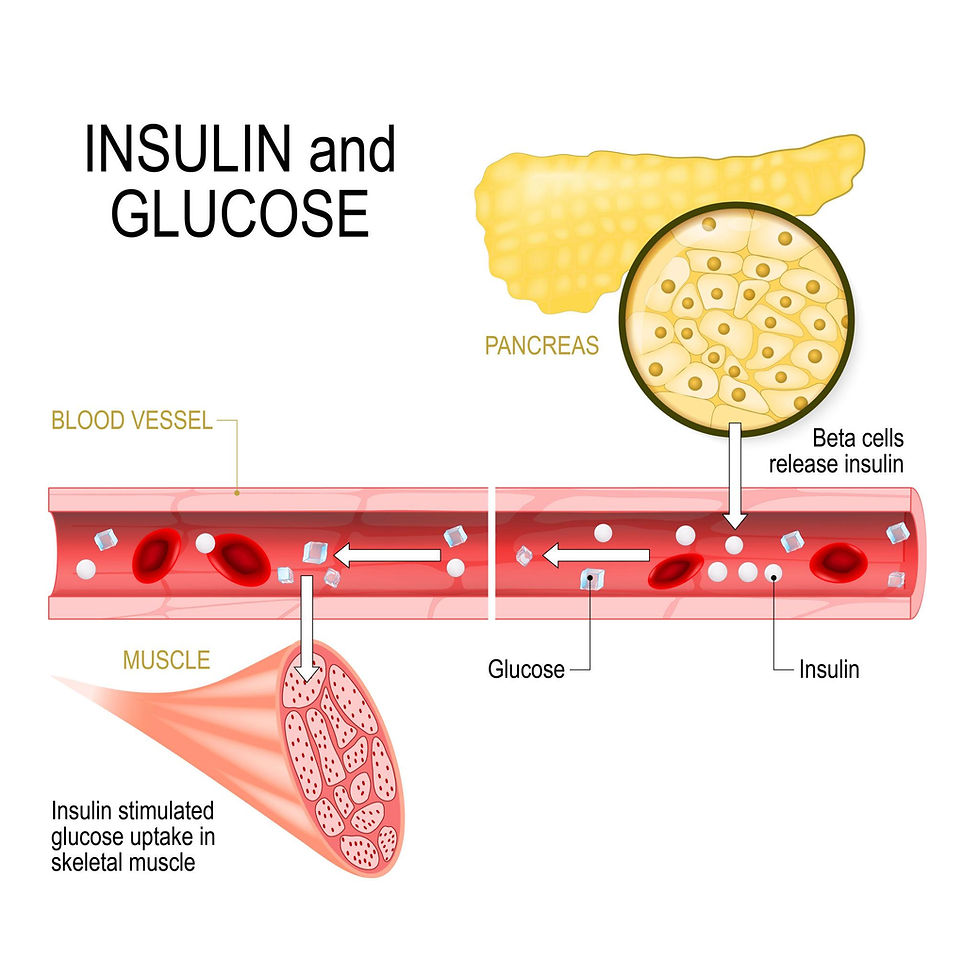
After a meal, glucose enters the bloodstream. The pancreas releases insulin, which helps glucose move into cells where it is used or stored.
As long as this system works efficiently, blood sugar remains within a narrow range.
What Happens After You Eat
After a meal, carbohydrates are broken down into glucose. This glucose enters the bloodstream.
The body responds immediately.
The pancreas releases insulin that helps move glucose from the blood into the cells.
Insulin signals cells to take in glucose
Blood carries glucose to muscles, liver, and other tissues.
Muscles : Use glucose immediately or store it.
Liver : Stores glucose as glycogen for later release.
Fat tissue: Stores excess energy when intake exceeds need.
This keeps blood sugar within a narrow range.
Why Does Insulin Increase in the First Place?
When cells do not respond properly, the body compensates. It produces more insulin to push glucose into the cells. For a period of time, this works. Blood sugar remains within the normal range, giving the impression that everything is fine.
How Daily Eating Patterns Keep Insulin Elevated
This process is not driven by one meal or one day. It is shaped by repeated patterns. Frequent eating, constant snacking, and foods that rapidly raise blood sugar all keep insulin levels elevated for long periods.
The body is rarely in a state where insulin can return to baseline. When exposed to repeated signals, it adjusts. If insulin remains elevated for long duration, cells gradually become less responsive to it. This happens slowly, over years.
When Blood Sugar Finally Rises
Eventually, the body can no longer compensate. Even high levels of insulin are no longer enough to maintain normal blood sugar. At this point, glucose begins to accumulate in the bloodstream. This is when diabetes is diagnosed.
But by now, the underlying problem has been developing for years.
Closing Transition
If insulin is already elevated years before diabetes appears…and if the body is working hard to keep blood sugar normal…then the next question becomes:
How does the body manage blood sugar so precisely in the first place?


Comments