
When Blood Sugar Is Normal — But the Body Is Compensating
Updated: Mar 22
The Diabetes Series — Part 2
What Goes Wrong Before Blood Sugar Rises?
After understanding how tightly the body regulates blood sugar, a natural question arises.
If this system is so efficient, why does diabetes develop at all?
More importantly, what is happening in the body before blood sugar begins to rise?
The answer is both simple and uncomfortable: the problem begins long before diagnosis, at a stage where everything appears normal on routine testing.
The Shift From Balance to Compensation
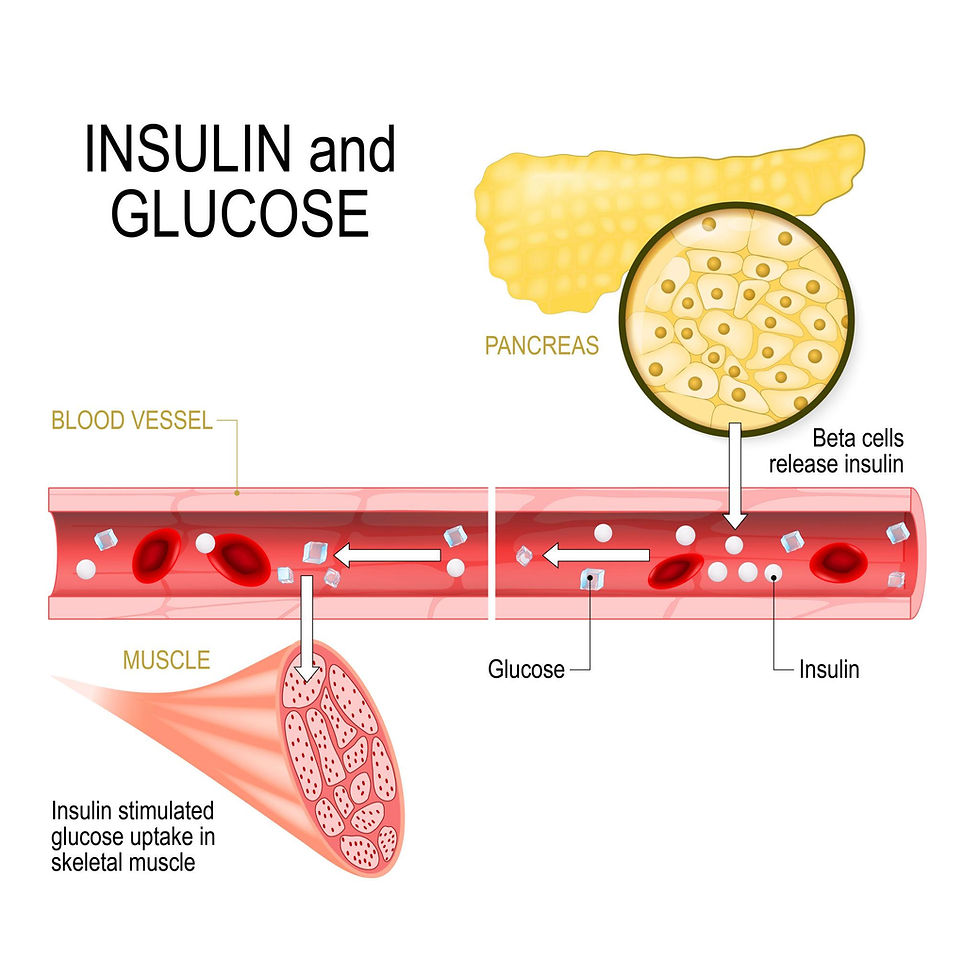
In a healthy state, insulin works quietly and efficiently. After a meal, it helps move glucose into muscles, stores some in the liver, and ensures that excess energy is handled safely.
But this smooth coordination depends on one crucial condition — that the body’s tissues respond properly to insulin.
When that response begins to weaken, the body does not fail immediately. Instead, it adapts.
Muscles take in a little less glucose. The liver does not fully reduce its glucose output. Fat tissue begins to behave differently. These changes are subtle, but together they mean that the same amount of insulin is no longer enough to maintain control.
At this point, the body makes a decision: it increases insulin production.
This stage is known as compensatory hyperinsulinemia — where higher insulin levels are used to maintain normal blood sugar.

Why Blood Sugar Still Appears Normal
This is where the process becomes misleading.
Even though tissues are becoming less responsive, the pancreas produces more insulin to compensate. That extra insulin forces glucose into cells and partially suppresses the liver’s glucose output.
So when you measure blood sugar, it still falls within the normal range.
From the outside, nothing appears wrong. Internally, however, the system is under increasing strain.
This phase can continue for years. It is not a stable balance but a sustained effort to maintain control despite declining efficiency.
What Is Changing Inside the Body
To understand this properly, we need to look at the three main organs that respond to insulin: muscle, liver, and fat. These are the core sites where insulin resistance develops.
Muscle: Reduced Glucose Uptake
Muscles are the largest consumers of glucose after a meal. Under normal conditions, insulin enables them to absorb and store glucose efficiently.
As resistance begins, this uptake becomes less effective. The transport mechanisms that move glucose into the cell no longer respond as well to insulin signals.
This means more glucose remains in circulation after a meal — a problem the body now has to manage through higher insulin levels.
Liver: Failure to Switch Off Glucose Production
The liver plays a dual role. It stores glucose after meals and releases it when needed, especially during fasting.
Insulin’s job here is to suppress glucose production when food has already been consumed. But in the early stages of insulin resistance, this suppression becomes incomplete.
The liver continues to produce glucose through processes like gluconeogenesis and glycogen breakdown, even when insulin is present.
This creates an unusual situation: glucose is entering the bloodstream from both food and the liver at the same time.
Fat Tissue: Energy Leakage Into the System
Fat tissue is not just a storage depot; it is metabolically active and tightly regulated by insulin.
Normally, insulin prevents excessive breakdown of stored fat. But when fat cells become resistant, this control weakens.
As a result, more fatty acids are released into the bloodstream. These circulating fats interfere with insulin signaling in other tissues and contribute to further resistance.
Over time, this can also lead to fat accumulation in places like the liver and muscles, worsening the problem.
A System That Is Working Harder, Not Better
At this stage, the body is not failing. It is compensating.
Blood sugar is normal. But insulin is elevated. The liver is partially ignoring signals. Muscles are less responsive. Fat tissue is releasing more fuel than it should.
All of this is being held together by one mechanism — increasing insulin output.
This is why early metabolic dysfunction is often missed. The most visible marker, blood sugar, is still under control.
Why This Stage Matters More Than Diagnosis
By the time blood sugar begins to rise, the system has already been under strain for years.
Insulin resistance does not suddenly appear at diagnosis; it develops gradually, often over a decade or more before type 2 diabetes becomes evident.
During this period:
Hormonal balance is already altered
Energy handling is already inefficient
Fat distribution is already shifting
What we call “diabetes” is therefore not the beginning of the problem, but a late stage of an ongoing process.
Comments