
Energy, AMPK, and Insulin: How the Body Controls Sugar
Updated: May 3
How to Control Blood Sugar Through APMK : Part 1
What This Post Is About
The body is constantly balancing between storing energy and using it.
This post explains how a cellular system called AMPK senses energy levels and helps shift the body toward efficient energy use.
Understanding this shift gives a clearer picture of how blood sugar is regulated—not just by insulin, but by how the body uses energy.
How Cells Sense and Use Energy
Inside every cell, energy is required for everything it does. This energy is stored in a molecule called ATP (adenosine triphosphate), often described as the body’s energy currency.
When energy is used, ATP is broken down step by step:
ATP→ADP→AMP
So during energy use:
ATP levels go down (as it is consumed)
ADP increases first, and with continued demand AMP begins to rise
When AMP rises, it signals that energy is being used and becoming limited
This rise in AMP activates AMP-activated protein kinase (AMPK)—the system that helps the body respond to low energy.
The Energy Sensor That Guides Energy Use
AMPK does not produce energy. It senses the cell’s energy status and directs how the body should respond.
When energy is low, AMPK switches on. When energy is sufficient, it remains relatively inactive. Its role is to shift the body toward efficient use of available fuel.
How Cells Shift Between Storage and Usage
Every cell toggles between two states: anabolic (storing energy) and catabolic (using energy). The enzyme AMPK acts as the master switch, determining which state dominates.
When AMPK Is Inactive (Storage Mode)
Energy supply exceeds demand.
Glucose uptake slows; excess energy stores as glycogen or fat.
Blood sugar lingers, demanding more insulin to clear it.
When AMPK Is Active (Usage Mode)
Cells ramp up glucose uptake—muscles do so with less insulin reliance.
The liver curbs gluconeogenesis (making new glucose from non-carb sources, like during fasting or exercise), preventing excess release.
Stored fat breaks down via lipolysis for fuel.
Result: Blood sugar drops naturally as the body burns energy efficiently.
AMPK drives the optimal shift from storage to usage, improving blood sugar control. Mild activation yields gradual benefits; sustained activation (e.g., exercise or fasting) triggers profound metabolic changes.
How Insulin and AMPK Work Together
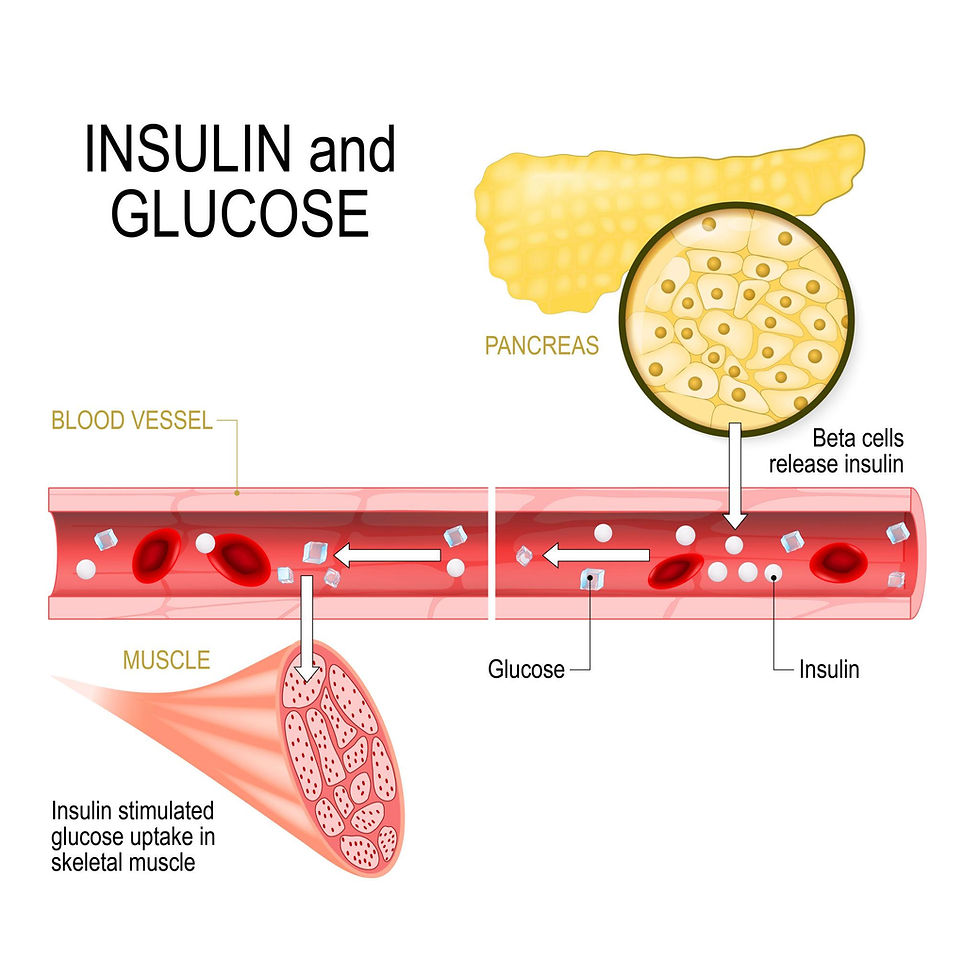
Insulin is released by the pancreas after a meal, signaling that glucose should enter the cells.
How effectively this happens depends on the cell’s internal state.
When AMPK activity is low, cells respond poorly. Glucose remains in the blood, and the pancreas compensates by releasing more insulin.
When AMPK is active, cells are already in an energy-using state. They accept and use glucose efficiently, so less insulin is needed.
In this way, insulin delivers glucose, but AMPK determines how effectively it is received and used.
Why the Pancreas Gets Overworked
The pancreas increases insulin production in response to poor glucose utilization. This is a compensatory response, not the underlying problem.
As AMPK activity improves and cells use energy more efficiently, glucose handling becomes smoother. Insulin demand decreases, reducing the burden on the pancreas.
Supporting the pancreas, therefore, means reducing the strain on it rather than stimulating it further.
Beyond Blood Sugar — A Broader Energy Shift
AMPK is not limited to blood sugar control. It regulates how the body uses energy as a whole.
When active, it shifts the body away from storage and toward usage. Fat is used as fuel, glucose is handled more effectively, and the liver reduces unnecessary glucose production.
This supports efficient energy use and better metabolic balance.
Cellular Clean-Up and Renewal
Along with these metabolic effects, AMPK supports Autophagy.
Autophagy is the cell’s internal clean-up mechanism. Damaged or worn-out components are broken down and recycled, preventing their accumulation.
This includes the renewal of mitochondria, improving the cell’s ability to generate and use energy.
Why This Matters
When energy is poorly managed and cellular damage accumulates, the internal environment becomes unstable over time.
By improving energy use and supporting cellular renewal, AMPK helps maintain balance.
This is why it is linked to weight regulation, metabolic health, and long-term well-being—as a foundational regulator rather than a direct cure.
Summary
Blood sugar is not controlled by insulin alone. ATP and AMP reflect the cell’s energy state, and AMPK reads this to shift the body between storage and use.
Insulin delivers glucose, but AMPK determines how effectively it is used. When active, it improves glucose uptake, reduces liver glucose production, and promotes fat use—helping stabilize blood sugar while lowering insulin demand.
It also supports cellular clean-up (autophagy) and overall metabolic balance, easing the burden on the pancreas.
In the next part, we explore how everyday foods and other factors can help activate this pathway.


Comments