
Bamboo in Food, Medicine, and Ecology
How Different Parts of Bamboo Are Used
Bamboo appears in many forms in traditional use. Not as a single remedy, but as a plant whose different parts serve different purposes.
The shoot is used as food. The leaf is used for cooling. The seed is used as a grain. The salt is used in Siddha and traditional medicine.
Each form serves a different function.
The Edible Form: Bamboo Shoots
Bamboo shoots are not the mature plant.They are the young, emerging growth — soft, tender, and usable as food. When harvested early, it is soft and edible; but once it matures, it becomes fibrous and inedible.
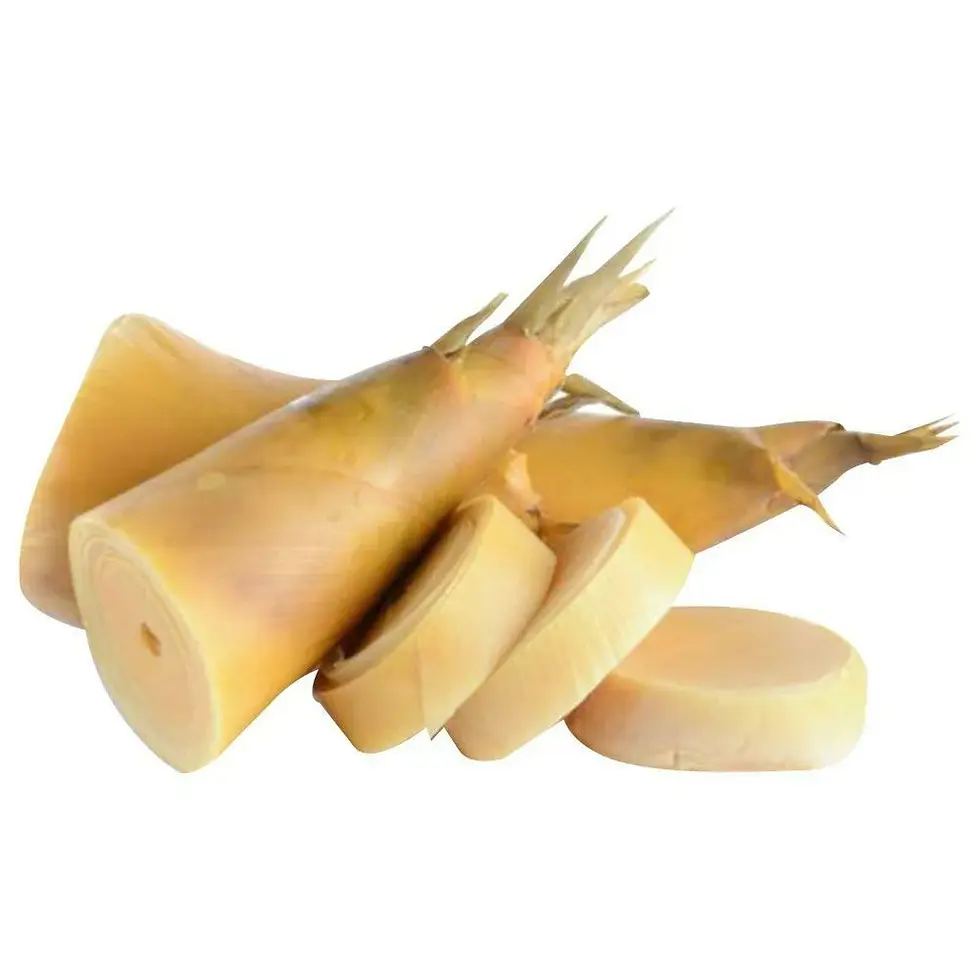
Fresh shoots contain compounds that can release cyanide. So they must be prepared. Peeling, slicing, and boiling are essential steps. Even simple boiling for 10–30 minutes makes them safe. They can be used simple curries or fermented and made into pickles for gut health. Shoots can be sliced and sun-dried and stored for long periods.
How Bamboo Shoots Help People With Diabetes
Once prepared, bamboo shoots are not heavy foods. They are low in fat.They are rich in fiber. They digest slowly.
Their high fiber and low glycemic load slows glucose absorption. They improve insulin response and support gut microbiome.
Instead of a sudden rise in blood sugar, there is a gradual release.Instead of heaviness, there is a sense of lightness after eating.
Helps With Joint Health
Bamboo is often associated with silica. Silicon contributes to collagen synthesis helps to maintain connective tissues — cartilages and ligaments. By reducing metabolic inflammation and maintaining extracellular matrix integrity, it supports the framework on which joints depend.
Bamboo Rice - A Rare Natural Grain
Bamboo produces seeds only when it flowers — a rare event that may occur only once in several decades. These seeds are collected and used as food. This is what is known as bamboo rice. They resembles wheat or paddy grains and have nutty taste when cooked.
How It Behaves as Food
Bamboo rice is closer to a whole grain. It contains more fiber than polished rice. It digests more slowly. It releases energy more gradually. It does not lower blood sugar directly: it simply avoids stressing the system.
Bamboo Leaves: The Cooling Aspect
Bamboo leaves are used differently. They are prepared as decoctions or teas. Not to nourish, but to calm. They contain Polyphenols which help reduce oxidative stress and reduce inflammation. They are said to be "cooling" in ayurveda which means they reduce internal agitation — heat, irritation, restlessness, and support fluid balance and detox pathways.
Bamboo Salt (Moongil Uppu)
Bamboo salt is not found in nature as such. It is made by packing and sealing rock salt into bamboo, and heating it repeatedly. Bamboo salt contains trace minerals.
Bamboo Manna (Tabasheer, वंशलोचन / Vanshlochan or Banslochan)
Bamboo plants usually grow for many years without flowering. After a long cycle (sometimes 30–60 years or more), they flower once.
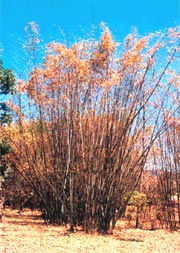
After flowering, they produce seeds. The plant often dies after flowering, making this a one-time yield. Inside some bamboo stems, a substance may form naturally.This is known as bamboo manna or tabasheer. It is rich in silica. Traditionally, it is associated with structural support —bones, joints, and hair.
Bamboo and Hair
Hair is often thought of only as protein. But it also depends on the condition of the tissues that support it.
Silica plays a role in that structure. Silica may support hair thickness and strength
Antioxidant effects (from associated compounds) may support scalp health
Improved mineral balance may indirectly influence hair quality
Beyond the Body: The Ecological Role
Bamboo is one of the fastest-growing plants on earth. It absorbs carbon. It is a naturally renewable resource, unlike many trees that take decades to mature. Some species grow several feet in a day. It regenerates from its root system after cutting. Its roots help hold soil and prevent soil erosion. It supports water retention in the ground
This is why bamboo is often found along slopes and forest edges.
Almost every part of bamboo is used:
Shoots → food
Leaves → traditional remedies
Culm (stem) → construction, tools, crafts
Residue → fuel or compost
Comments